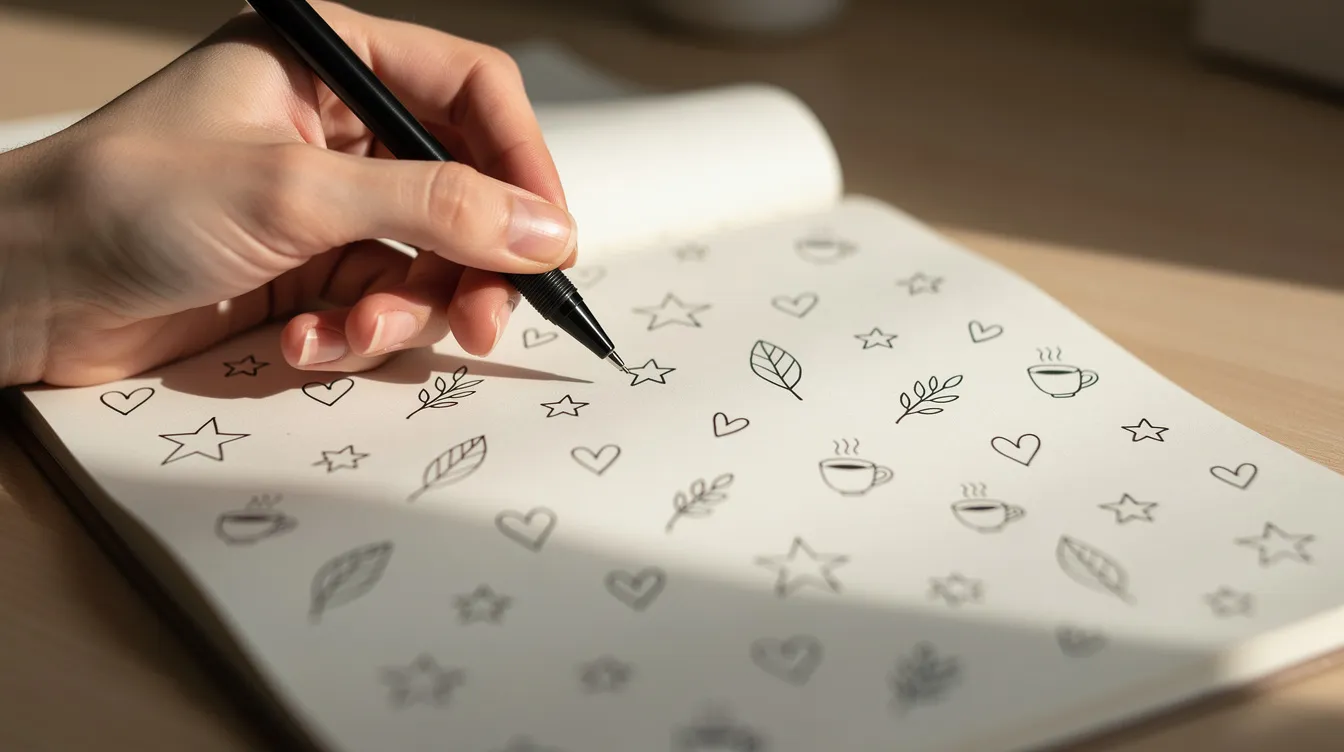
If you can draw a circle, a line and a wobbly square, you already have the drawing skills for almost everything in this post. I am Tamsin, and below are 33 easy doodles for beginners that I keep coming back to, plus a guide to picking the right one for your mood. Each drawing takes a few minutes, and I hope you find a few you love.
Easy Doodles for Beginners: What Counts (And Why I Love Them)
I am a school science lab technician in Fremantle, Western Australia, and I have always liked to doodle in the margins of stock-check sheets. Little flasks with faces, spirals that grew out of the corner of a column, tiny stars next to chemical names. None of it was art in any serious sense, but it made the paperwork feel less like paperwork, and every doodle was a small bit of fun.
Easy here means built from very simple shapes: a circle, a straight line, a box, an arc, a triangle. Every one of these easy doodles needs only paper and a pen, and the shape of each is just a mix of those basics. This list of easy doodles for beginners suits busy adults and the “I can’t draw” crowd, not art students. If you can make a mark, you can doodle, and a quick doodle on scrap paper is a lovely first drawing.
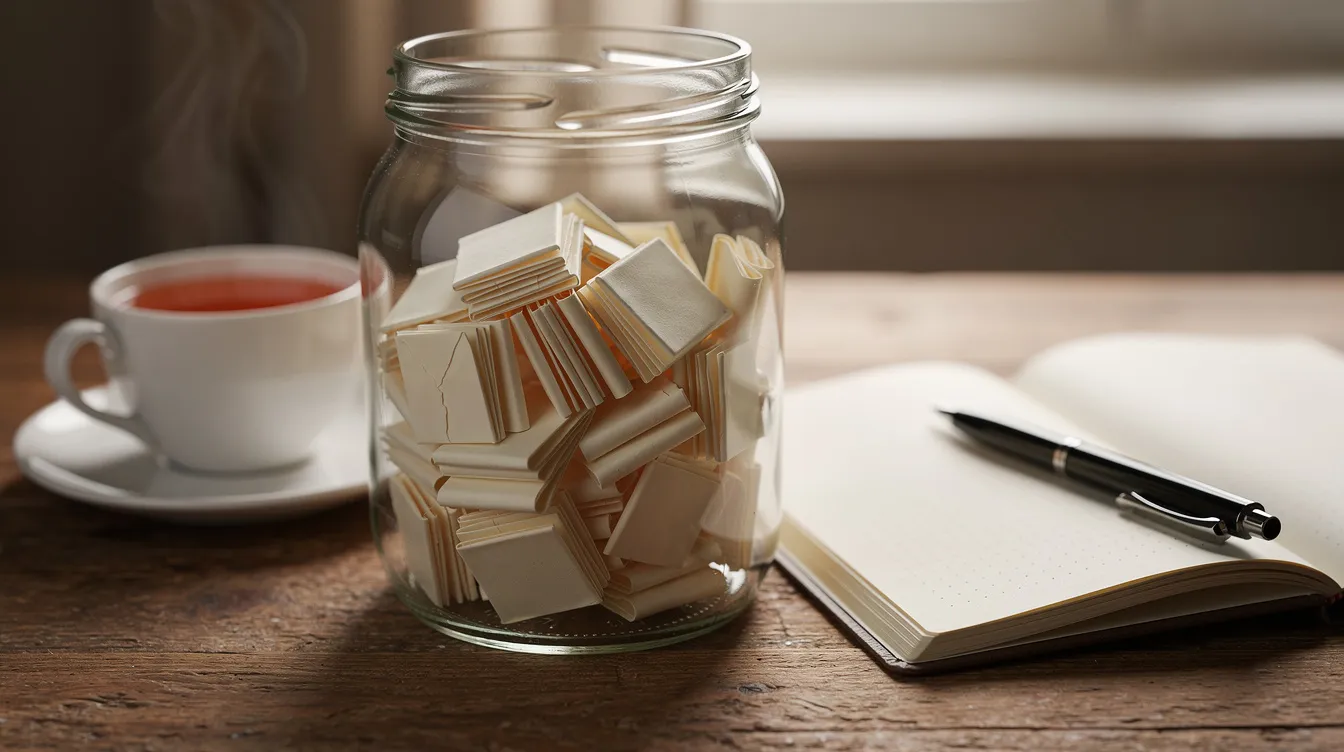
Two years ago I started folding prompts onto scraps of paper and dropping them into an old pickle jar, my Doodle Jar, so my journal pages always had something to do. Friends have since stolen the jar method, which I take as a compliment. The word doodle was not always friendly: in the early 17th century it meant “fool” or “simpleton”, and the modern sense of drawing aimlessly only appeared in the 1930s. If you are curious how doodling has been studied, Wikipedia’s entry on doodles is a good starting point, but you do not need history to begin. You need a pen and something to draw on.
How I Chose These Easy Beginner Doodles
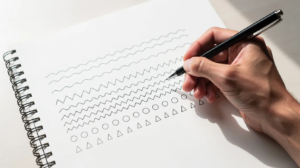
I narrowed hundreds of doodles from my journals and prompt jar down to 33 realistic beginner doodles. My starting rule: practise five shapes first (circle, straight line, arc, square, triangle), drawn badly and quickly in a small patch of page. Every idea in this post is a combination of them, and the wobbly versions are the ones I end up liking because they look like they belong to a person. You do not need special art skills to doodle, and embracing imperfection is half the fun.
Simple Shapes First
Every idea breaks into circles, ovals, rectangles, arcs and straight lines, with no tricky foreshortening or realistic shading. Drawing everyday items trains your brain to see a complex object as one basic shape at a time, and that skill carries into every drawing you make.
Works On Scrap Paper Or In A Journal Margin
Each doodle fits a tiny space: a meeting notebook margin, a Post-it, or a bullet journal corner. These little doodles also work well in bullet journals for decorating pages and pairing with lettering. I keep a stack of scrap paper next to my kettle for exactly this. A dedicated book can ease the blank-page fear if scrap feels too throwaway, and a quick pencil sketch first never hurts. It is an easy way to practise on scrap paper, in the margins, or in a sketchbook.
Beginner-Friendly In Under 5 Minutes
One doodle should take roughly 1 to 5 minutes, so it feels low-pressure and repeatable, and if you want something more challenging later, you can treat these as a first step before moving to harder drawing exercises. Set a small timer; five minutes is plenty. You can create easy doodles for beginners with just paper and a pen, and the timer means you have started before you can talk yourself out of it.
Scales From Super Simple To Slightly Fancy
Each idea has an easy mode plus one or two small ways to dress it up (extra petals, patterns, tiny faces). My tip: add one detail, then stop, because over-adding is how most beginner doodles go wrong. When you are ready to add details, do it one at a time and the page stays calm. Keeping it simple lowers pressure and helps you create more.
No Fancy Supplies Required
A basic ballpoint or cheap fineliner and ordinary paper are enough, and no art supplies are needed. My view: a two-dollar pen gives you permission to make a mess, and plenty of beginners already have the basics together in old pencil tins or sketching packs. Drawing pens in a few point sizes are useful once you want variety, and a mechanical pencil is a lovely upgrade for a light sketch before you ink. Le Plume II markers are great if you want to add color later, and Tombow Fudenosuke brush pens suit beginners who want brush-style lines without a steep learning curve. Colour can lift a doodle, but it is never required. If you like more colourful pages, you can also finish small bits with paint.
33 Easy Doodles For Beginners To Try First
Flick through and pick the one that feels least scary, like ordering from a cafe menu. They run roughly from “ridiculously easy” to “still gentle but a bit more involved”. Treat the list as a place to play, not a syllabus. For readers whose problem is the blank page rather than the drawing, the prompt jar method (I write about it often on this blog) is where I send people: write ideas on scraps, fold them up, and pull one when you sit down. If you ever feel bored, that jar fixes it fast. I also keep a running list on this blog of ideas for doodling random things. If you need a starting point, my list of doodle prompts for blank pages is a good place to begin.
1. Tiny Stars And Sparkles
Plus signs, little diamonds and four-point twinkles to fill blank corners. Keep drawing a five-point star in one continuous line, then a chunky rounded one, and scatter different sizes for a background. This doodle is a great warm-up when you feel stiff, and a rescue when you are bored in a meeting. Stars look best in clusters.
2. Simple Hearts
Two bumps on top, one point at the bottom. This doodle stays cute even when lopsided, and if one comes out wrong, add a second outline; doubling hides a surprising number of mistakes. Five hearts around a circle make quick petals for a flower. They feel childish if overused, but I still draw them everywhere.
3. Line Borders And Boxes
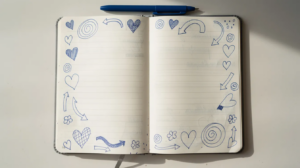
Simple frames around dates, headings or habit trackers using lines, corners and dots. A border makes a page feel intentional and hides messy writing edges, with no art pressure at all. Drawing a wobbly line gives you more personality than a ruler-straight one, so do not fuss.
4. Little Leaves And Sprigs
A wavy stem with teardrop leaves either side: a pointed oval, a centre line, short side veins. Think of the leaves as long petals on a stem, and layer a few to create a sprig. A row makes a border in about a minute. Detailed versions eat time and overworked ones smudge.
5. Balloon Letters For Titles
Turn block capitals into puffy letters with a double line. This doodle is a gateway to hand lettering without a brush pen, and it makes shaky handwriting playful, ideal for headings like “October Habits”. If you have a hard time moving beyond everyday handwriting, practice by copying simple letter shapes first. Fill the letters with tiny dots for extra fun. It is slow for long sentences.
6. Simple Coffee And Tea Cups
A rounded U-shape or rectangle, a loop handle and two wavy steam lines. I have drawn about two hundred of these and still enjoy them; my coffee cup doodle is probably my favourite. Add details like a saucer once the cup feels steady. A cute mug looks great in meeting margins and morning routine pages.
7. Weather Icons (Sun, Cloud, Raindrops)
A circle sun, a cloud made of a flat bottom line and three or four bumps on top, and teardrop rain underneath. This doodle tracks the weather without an app, and drawing it in a grid makes a tidy strip. Each small shape can be fiddly on cheap paper.
8. Tiny Houses And Front Doors
A square, a triangle roof and a small rectangle door. If you draw the door open, show a tiny shape on the other side so it feels more like a real little house. Add a chimney and a curl of smoke and it suddenly has personality. A row of houses is a satisfying drawing that practises structure without real perspective. Pencil a quick sketch first, then ink the lines you like. Too many details overwhelm a beginner, so add details one at a time.
9. Simple Flower Line-Up
Three basic flowers: a daisy (circle plus petals), a tulip (a cup with bumps) and a five-petal blossom. Wobbly petals read as charming rather than wrong. To create a fuller bloom, draw the petals in a ring and let them overlap. This doodle suits spring in an Australian journal (September to November). Colour if you like, but ink alone works fine.
10. Books And Stack Of Notebooks
Closed books as rectangles with a spine, plus a small angled stack. Drawing a book is great for reading logs, study schedules and TBR lists, and kids who love reading tend to grab this one. Stacked perspective can be tricky, so start with a single book lying flat.
11. Simple Cats And Dogs (Front View)
A circle or oval head, triangle ears, dot eyes, nose and mouth. A cat is a circle with two triangles; a bear is a circle with two half circles. You do not need to understand anatomy, only to stack one shape for the head and one for the body. Animals are a fun subject, and a cute pet doodle cheers up a stressful entry. Whiskers are the details that get out of hand.
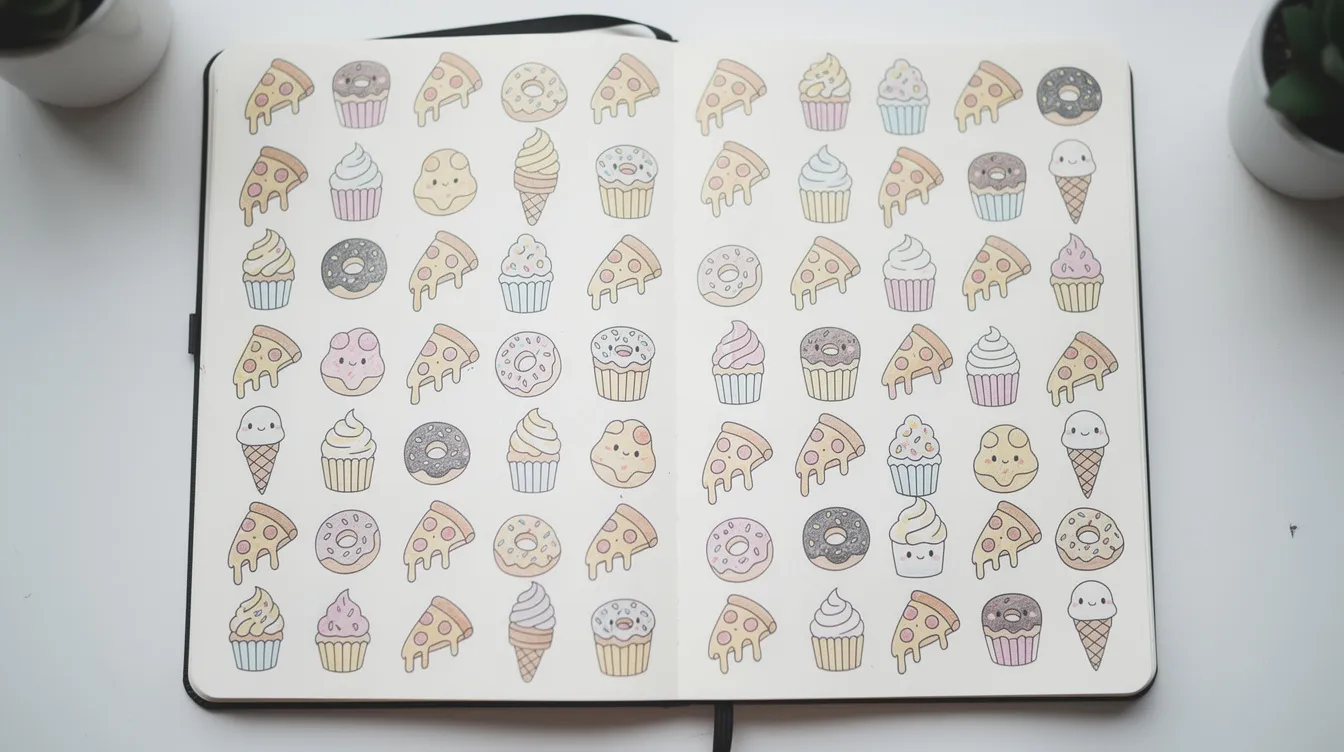
12. Cute Doodles Food Icons (Slice Of Pizza, Ice Cream, Donut)
Stylised food from triangles, circles and ovals, with an optional face. Think pizza slice, ice cream cone, donut, or a popsicle as a simple summer doodle you can add color to with markers or crayons. It is playful rather than serious drawing, with easy sprinkles and tiny details. Good for meal-planning spreads and birthday pages. I once spent a whole lovely day drawing cake slices in different flavours.
13. Little Sea Creatures
Ultra-simple fish (an oblong shape with a triangle tail), seashells and jellyfish from arcs, ovals and wiggles. A jellyfish looks amazing with just one arc and a few wiggles underneath. Curvy shapes are relaxing to repeat, ideal for beach holiday pages and the December school break. This doodle is a fun way to wind down, but tentacles can tangle.
14. Simple Planets And Moons
Circles with rings, crescent moons and dotted star clusters. Impressive in a header using only circles and lines; suits late-night journaling. Shading craters tempts beginners into realism, so resist that and keep things flat. A tiny sketch of Saturn is a good example, and drawing it takes under a minute.
15. Banners And Ribbons
Folded strips with a small tail at each end. They frame words like “Today”, “Gratitude” or “Monday” with no drawing experience. Pencil the letters first, then wrap the ribbon around them. Folds may confuse beginners, so start with a straight rectangle and add the tails last.
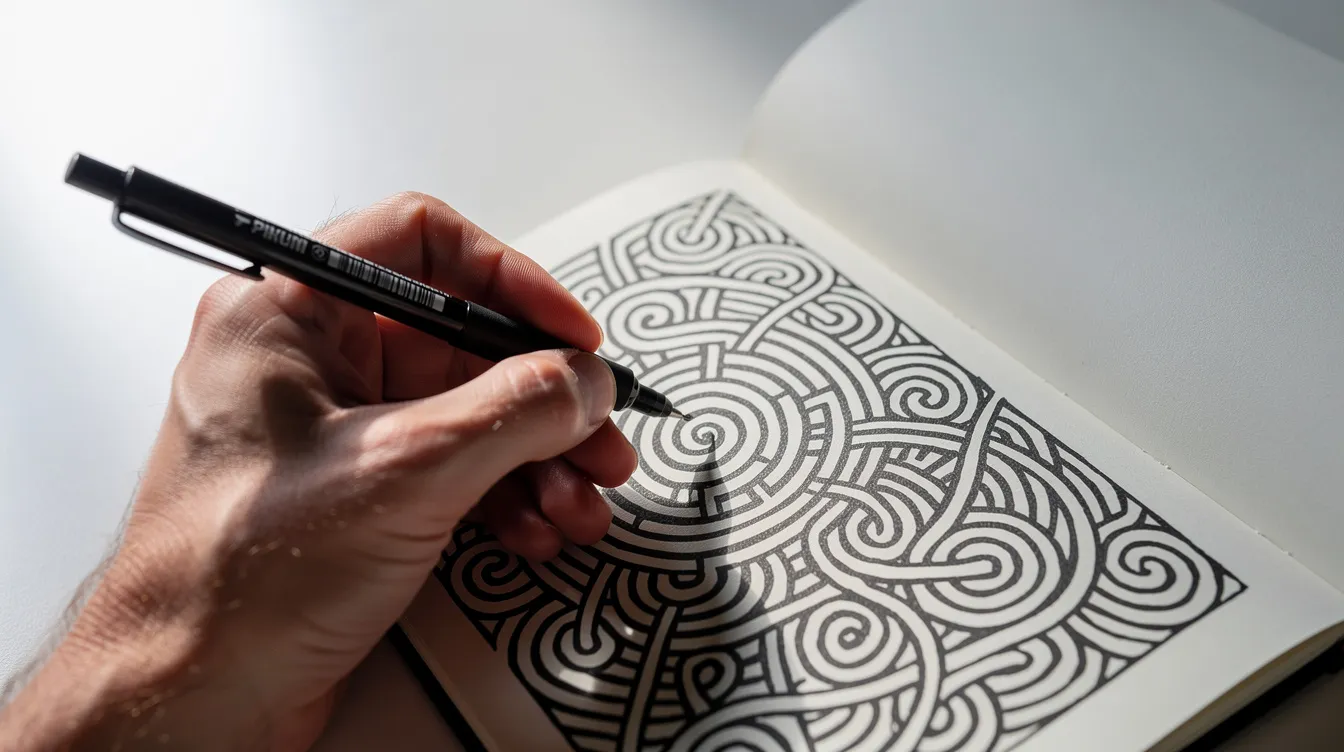
16. Simple Pattern Fillers
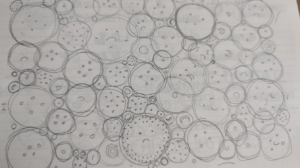
Stripes, polka dots, checkerboards, zigzags, scallops, little crosses. Repeating a pattern is calming and almost meditative, and patterns teach your hand to stay steady for all your drawing. This filler doodle is pattern art at its easiest, good for covering a messed-up box, though it is time-consuming over big areas.
17. Plants In Pots
Terracotta pots as rectangles or trapezoids, with cacti and round-leafed plants. Overlap a few ovals to create a cactus and add dots for spikes. This doodle is like decorating a tiny windowsill in your journal; good for habit trackers. Too many spikes overwhelm.
18. Simple Faces And Emotions
A circle, two dots and a curve, then change one thing: raise an eyebrow, add a tongue, give it a cute hat. You can also try a simple girl face with heart-shaped eyes as another easy variation. Kids love this part. My margin flasks with faces started here. Tiny changes make a big difference, which can teach beginners to loosen up about “likeness”. Good for mood trackers.
19. Simple Travel Icons
Suitcase squares, little maps with X marks, tiny location pins. This doodle is symbolic, so accuracy is not critical. Good for packing lists and trip countdowns; small details like handles can be fussy.
20. Simple Tech Icons (Phone, Laptop)
Rounded rectangles for phones, larger ones for laptops with a tiny screen inside. Each is a friendly shape that gives you practice with consistent corners. At too small a scale, every wobble shows, so keep the drawing bigger.
21. Simple Sports Icons (Ball And Sneaker)
A circle ball with a couple of lines and a stylised side-view shoe. This doodle marks movement days in workout logs and parkrun notes. Ball lines need planning, and shoes can look stiff, so keep the drawing loose.
22. Simple Music Notes
Quavers and crotchets from filled circles and stems. This filler doodle suits corners and the space along lines of text, and works for playlists and gig memories. Stems can be uneven.
23. Simple Keys And Locks
A basic padlock and a skeleton key from circles and lines. Suits goals pages and “things I am working on” spreads. This doodle gets messy fast, since key teeth are fiddly.
24. Simple Banners With Date Tabs
Small rectangle strips as file-folder-style date tabs. They organise a busy month across a double-page spread. Use light pencil lines to plan the spacing and erase them later, and the doodle looks neat.
25. Simple Mountains And Hills
Pointy triangle peaks with snow caps and gentle rounded hills. Each peak is one simple shape, and a few of them look awesome together. This drawing feels like a landscape with very little effort; good for travel logs and hiking trackers. To create depth, overlap the peaks, but stacked peaks can get confusing.
26. Simple Candles And Fairy Lights
A vertical rectangle with a tiny flame, and string lights made of repeating ovals. This doodle is cosy for July or December pages. Flames come out inconsistent, so keep the drawing loose and do not fuss.
27. Envelopes And Letters
A rectangle envelope with a diagonal cross and a tiny heart seal. It is good practice for neat corners and suits pen pal logs and email task lists. A little stack of letters tied with string is a bit of mail art, and it adds variety.
28. Simple Vehicles (Car Or Bicycle Silhouette)
A simplified side-view car and a basic bike from circles and line frames. A bike is two circles and a few lines, and layering them can create a surprisingly lively doodle. Wheels reveal shaky circles, and proportion errors stand out.
29. Simple Robots
Stacked rectangles and circles with antennae. Not realism-based, so anything goes; good for tech project notes and kids who grab your notebook. A robot doodle is really just a head, a body and some limbs made of blocks. Too many details crowd the page, but when you simplify it, don’t forget the eyes and antennae.
30. Simple Monsters And Ghosts
Blob shapes with one or two eyes, little horns and silly teeth. A ghost is a pear shape with a wavy bottom edge. Drawing a monster has zero realism expectation, which calms perfectionism; this doodle is good for stress dumps and October spreads. A cute ghost with eyelashes is a safe bet.
31. Simple Clouds And Rainbows
Fluffy cloud bumps and 3 to 5 nested arcs for a rainbow. This doodle works in black and white and suits gratitude logs and recovery journals, where I hope a rainbow can feel like a small promise. Many arcs can strain the wrist.
32. Simple Trees
Lollipop trees (stick trunk plus circle top) and triangular pines. Change the details and a tree works in every season. Trunks float if no ground is drawn, so add a quick line underneath. Drawing a small forest of different heights is relaxing.
33. Simple Mazes And Swirl Paths
A path that loops and doubles back, like a finger maze. Extremely calming when your brain is tired of words; good for long phone calls and waiting rooms. Easy to overwork and smudge. Try drawing the path going in different directions across the page and changing the maze form, rather than always using the same layout, to create a swirl.
Quick Comparison Of These Easy Doodle Art Beginner Doodles
Here is a quick cheat sheet for choosing what to doodle based on mood and time. Butterflies are a popular theme too; their wings are basically big petals, so they fit neatly alongside flowers and leaves.
-
Tiny Stars And Sparkles: Best for 30-second warm-ups and filling awkward gaps around text.
-
Hearts, Flowers, And Leaves: Best for decorating journal pages and softening blocky layouts.
-
Borders, Boxes, And Banners: Best for organising bullet journal headings and lists.
-
Faces, Pets, And Monsters: Best for expressing mood and personalising your pages.
-
Coffee Cups, Food, And Little Objects: Best for everyday life logs and planner spreads.
-
Space, Weather, And Landscapes: Best for themed pages, travel diaries, and monthly covers.
-
Patterns, Mazes, And Swirls: Best for relaxing your mind when you feel stuck or stressed.
How To Choose Which Easy Doodles Suit You Today
There is no single right doodle, but some fit certain situations better. A small rule from my jar, such as “draw three of these using only circles”, removes the pressure of choosing. A doodle allows creative expression without pressure, and that is the whole point.
Choose Based On Your Energy Level
Low-energy days: repeating stars, hearts or simple patterns. Medium-energy evenings: flowers, borders, mugs and books. Save vehicles, folded banners and houses for higher-energy moments. If your low energy is really a mental block, drawing simple doodles when you feel hopeless can help. No art degree is required, and even a few minutes of doodling resets my mood on a hard day. It also helps me forget the pressure to make something polished.
A practical habit: draw the same thing three times. The second is usually better than the first and the third often has a bit of style, which is progress you can see on one page. Once that starts to click, I can get a bit obsessed with repeating one simple shape or subject across the whole page. Repeating the same drawing builds muscle memory and hand-eye coordination over time.
Choose Based On Page Purpose
Practical planner pages suit boxes, banners, icons and tiny symbols that do not overwhelm text. Reflective entries suit hearts, faces, monsters, clouds, and keys or locks. Creative spreads suit houses, mountains, plants and sea creatures. For layouts that carry these doodles well, try, for example, a row of stars under a heading, a cloud in a to-do list corner, or a mug beside a coffee tracker. I have also put together a list of doodles you can add to a bullet journal.
Choose Based On Space And Time
Ultra-small doodles (stars, notes, dots, mini leaves) for cramped margins or 2-minute bursts. Medium doodles (mugs, flowers, banners) for desk breaks. Full mini-scenes (a row of houses, an underwater strip, a mountain skyline) for 10 to 20 minute evenings and weekends, when a quick sketch in pencil first pays off.
Which Easy Doodles Should You Try First?
-
Choose stars, hearts, and simple patterns if you feel nervous and want something almost impossible to “mess up.”
-
Choose flowers, leaves, and plant pots if you love nature themes and want decorative borders and corners.
-
Choose faces, pets, and monsters if you want to express emotions or lighten heavy pages with character.
-
Choose banners, boxes, and icons if you mostly want to tidy and decorate a bullet journal or planner.
-
Choose space, weather, and landscapes if you want to build a small scene instead of separate stickers.
You cannot choose wrong, and repeating any one doodle over a week counts as real practice. It will improve your drawing without any formal lesson. When a page goes wrong, remember you can turn the mistake into something else: a blob becomes a cloud, a crooked line a stem, a smudge a shadow. That habit has saved more of my pages than any technique. It is a fun and casual way to express yourself.
Final Thoughts
Easy doodles for beginners do not need to look like art. These beginner doodles are meant to be quick, forgiving and fun, not gallery pieces. Just grab whatever is on the table and begin.
My own habit grew from lab margin scribbles to a whole jar of prompts on my kitchen bench, and I am glad I kept the rough pages. If loose sheets go missing, keeping them in a sketchbook helps. A pile of rough sketch pages is more encouraging than one polished piece you are afraid to follow. I hope you will keep yours too. Add more detail, or just turn the page, and do not worry about perfection.
Begin with one or two doodle types from this post, repeat them across a week, and watch your lines steady. If you want a little more structure in line, shape and proportion, I would point you toward Lisa Mitrokhin’s beginner drawing guide. I am a genuine fan of her calm, step-by-step teaching that never makes you feel behind.
This blog is just one hobbyist’s notebook. I do not teach and I have never sold a sketch. Every idea here is yours to adapt until it feels like your own style. That is the awesome thing about doodling: nobody is checking. Have a wonderful day.
FAQ
What is the easiest thing to doodle first?
Of all the easy doodles here, stars, hearts and leaves are the quickest, since each takes one or two strokes, which is why they come first in this post. A simple smiley face (circle, two dots, one curve) is a close fourth. All you need is paper and a pen.
Do I need special pens to start?
No. Any pen or pencil works. A fine liner is nice for neat outlines, but a ballpoint is fine while you find your feet. Easy doodles for beginners need nothing fancy, and you can create cute doodles worth keeping with one pen.
How long should I practise each day?
Five to ten minutes builds a habit. Short sessions are easier to repeat, and lines grow more confident over a few weeks. You will see an amazing improvement by the end of a month.
My doodles look childish. Is that a problem?
Not at all; slightly wonky doodles have the charm of folk art. To polish them, repeat the same drawing and add one small detail like a shadow line or a pattern. A small tip: easy doodles for beginners improve fastest when you repeat them.
How do I know what to draw when I sit down?
Pull a prompt from a jar or pick an object from your desk (a bunch of pens, your water bottle, your phone), and give yourself a small rule to remove the pressure of choosing. That is the whole idea behind this blog: you do not need to be creative on command, you just need a nudge. Now go fix yourself a cup of something warm, open your notebook, and draw one thing.