I have doodled beakers with faces in the margins of stock-check sheets at the school science lab in Fremantle for longer than I can remember. Googly eyes on an Erlenmeyer flask, a pipette wearing sunglasses, a frog sitting on a Bunsen burner. None of it was planned. That is the thing about random doodles: they happen when your hand moves before your brain catches up, and the result is almost always more fun than anything you would have chosen on purpose.
The secret to random doodling is to play with shapes, lines, and patterns without worrying about what comes out. The randomness, though, has to come from outside your head. Left alone, my mind only offers a star, a spiral and a cube, every single time. So I learned to borrow ideas from whatever was sitting on the bench, or later, from slips of paper in an old pickle jar.
If you want to know more about the history of doodling, the Wikipedia entry on doodles is a short, reliable read. And if you are curious about my own take on what doodling is and why we do it, I have written about that separately on this blog. For now, what follows is a pile of beginner friendly ideas for journals and sketchbooks. A doodle does not need to be good. It just needs to exist. Doodling techniques require zero planning and allow for playful expression, so there is nothing to lose. If you want a gentler starting point, my post on easy doodles for beginners walks through the basics first.
How I Choose a Random Doodle
I draw the nearest thing to my left hand. In the lab that has meant a pipette, a stapler and a roll of masking tape, each turned into a doodle with legs, a pattern or a speech bubble. One day the stapler had a surprised face and I liked it more than anything I had drawn all week.
I pick one cheap fineliner before I start so I am not hunting for the right pencil or pen. Setting a timer encourages quick, spontaneous drawing sessions. I set mine for five minutes and sketch the first shape that comes to mind until it rings. Quick warm-up exercises like this can help loosen up your drawing style before you even know what you are making.
Start With Simple Random Doodles
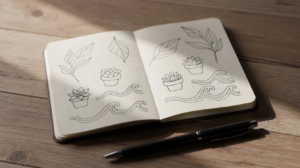
If the idea of picking a subject makes you freeze, start with a shape. Draw a circle. Then draw it again, slightly bigger, slightly squashed, slightly off to the side. Doodling simple shapes can create interesting patterns without any subject at all, and drawing simple shapes can help randomize your doodles because each variation surprises you. Repetitive patterns in doodles can create focus and flow, which is why a page of wobbly triangles feels calming rather than boring. If you think you cannot draw at all, I have written separately about how to draw simple doodles when you feel stuck, and it starts exactly here: one shape, repeated until something clicks. You can read more on how to draw simple doodles if you think you can’t draw.
Doodling Circles Without Planning
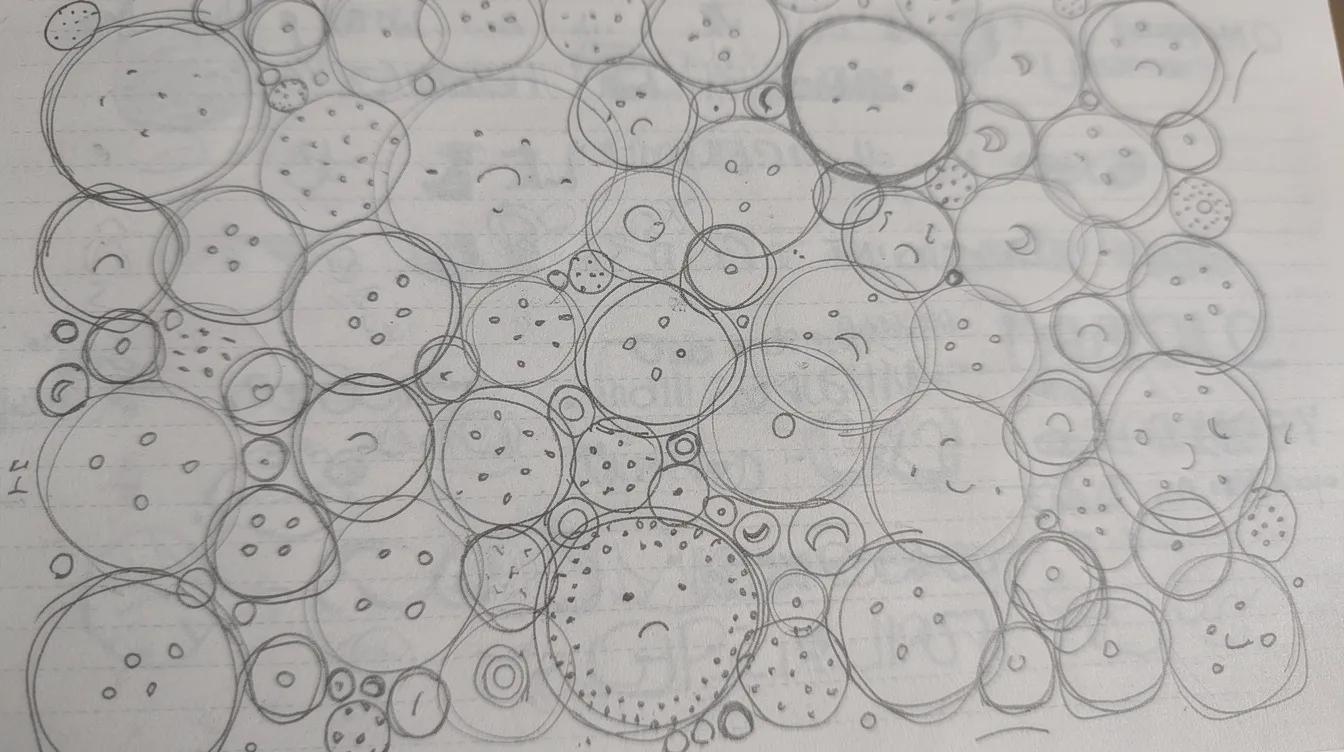
Move from your wrist to your whole arm. Doodling circles exercises your entire arm for relaxation, and you will notice the marks get smoother after ten or so. Vary the sizes across the page. Overlap circles to create playful clusters, then add small details inside selected ones: craters, dots, a tiny nose, a pair of eyes. Doodling circles can fill an entire sheet of paper, and the result looks like a page of moons or bubbles without any planning at all.
Continuous Line Doodles
Put your pen down and do not lift it until you are done. Continuous drawing uses one line without lifting your pen, and the wobbly result is part of the charm. Continuous line drawing is a fun doodle prompt technique that also loosens stiff handwriting, because your hand stops gripping so hard when it knows it cannot pause. Scribblin’ like this can lead to discovering hidden shapes in chaotic lines. If you see nothing in the finished scribbles, add eyes, because eyes make almost any shape look intentional.
A Simple Continuous Drawing Challenge
Choose one nearby object and draw its outer silhouette with one continuous line. Add one interior detail, maybe a highlight on a mug or the clip on a pen. Accept awkward shapes as part of the exercise. Blind contour drawing involves drawing without looking at the paper, and if you try it even once, you will laugh at the result and stop worrying about perfect lines. Techniques like the non-dominant hand challenge help remove perfectionism in the same way: the drawing will be terrible, and that is the point.
Cross Hatching Random Patterns
Draw a simple shape, any shape. Fill it with parallel lines going one direction, then cross them with lines going the other way. Cross hatching can create dense detail quickly, and changing the line spacing gives you light texture or deep shadow with nothing but a fine black pen.
My Beginner Cross Hatching Exercise
Draw a loose border around a small area. Fill one corner with widely spaced lines. Darken another section with closer lines. Compare the two textures. Cross hatching is a simple doodle prompt for beginners because the only decision is how far apart the lines go.

Easy Flower Doodles for Journals
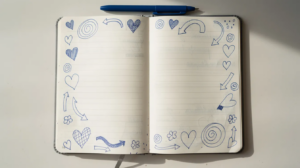
Draw five small petals around a dot. That is the whole flower. Drawing flowers adds visual interest to journal pages, and you can turn stems into decorative page borders running down the edge of your notes. Add leaves beside written entries and use flowers to soften empty corners where nothing else fits. Doodling flowers can refresh your mind and add beauty even on a plain to-do list. Drawing flowers is a popular doodle prompt for journals because the shape is forgiving: no two petals need to match.
Sun Doodles in Unexpected Shapes
Draw a circular sun with simple rays. Now draw another one, but replace the circle with a diamond. Give each sun a different facial expression: happy, sleepy, grumpy. Place small suns beside journal headings. Mixing silly doodle ideas with challenges like “draw a sun that is a triangle” can enhance creativity and keep you from repeating yourself.
Doodle Expressions That Match My Mood
Draw a basic face with simple features and change the mouth to show different emotions. A curved line up is glad. A wobbly line is uncertain. A circle is surprised. Doodling emojis can express different emotions, and matching each expression to my current feeling turns a doodle into a mood tracker. Doodling can be a way to express moods without using words, which is useful on days when writing feels like too much. A stapler with a surprised expression is oddly satisfying, and I add faces beside daily journal entries whenever the page feels flat. Doodling emojis can express your feelings creatively, even on random objects like a bowl or an apple.
Hearts and Heart Shaped Objects
Sketch one basic heart. Then turn hearts into balloons by adding a string and a tiny hand holding it. Fill hearts with repeating patterns: dots, stripes, cross hatches, tiny stars. Use them as small page markers to flag favorite entries. I once drew fifty hearts in two minutes, each with a different filling, and the page had more texture than anything I had spent an hour on.
Quick Figure Doodles
Begin each figure with a simple gesture, using circles for heads and curved body lines to suggest movement. A man on a skateboard is just a circle, a stick body in a pose and a rectangle with wheels. Skip detailed hands during quick practice. Nobody notices missing fingers in a two minute sketch, but they notice if the figure feels alive.
Random Objects I See Around Me
Choose one object from my desk, reduce it to basic shapes and draw a mug from a simple side view: a rectangle with a loop for the handle. Use household objects for unpredictable practice. Doodle prompts can include random objects around you, and the more ordinary the object, the more interesting the doodle tends to be. Break a hard prompt like a giraffe into plain shapes: a rectangle neck, an oval body, stick legs, then spots. Practicing drawing different perspectives develops spatial awareness, so try the mug from above too, and you will learn lots about how shape changes with view.
Turning Random Objects Into Doodles
Select the first object I notice, draw its outer silhouette and add one memorable feature. A mouse (the computer kind) becomes a cartoon mouse (the animal kind) with two round ears. Repeat with a second object, or draw only a part of it, such as the top of a lighthouse, because partial drawings are forgiving and often more interesting. Doodles can be transformed from random shapes into recognizable figures with just one added detail.
Cute Animal Doodles
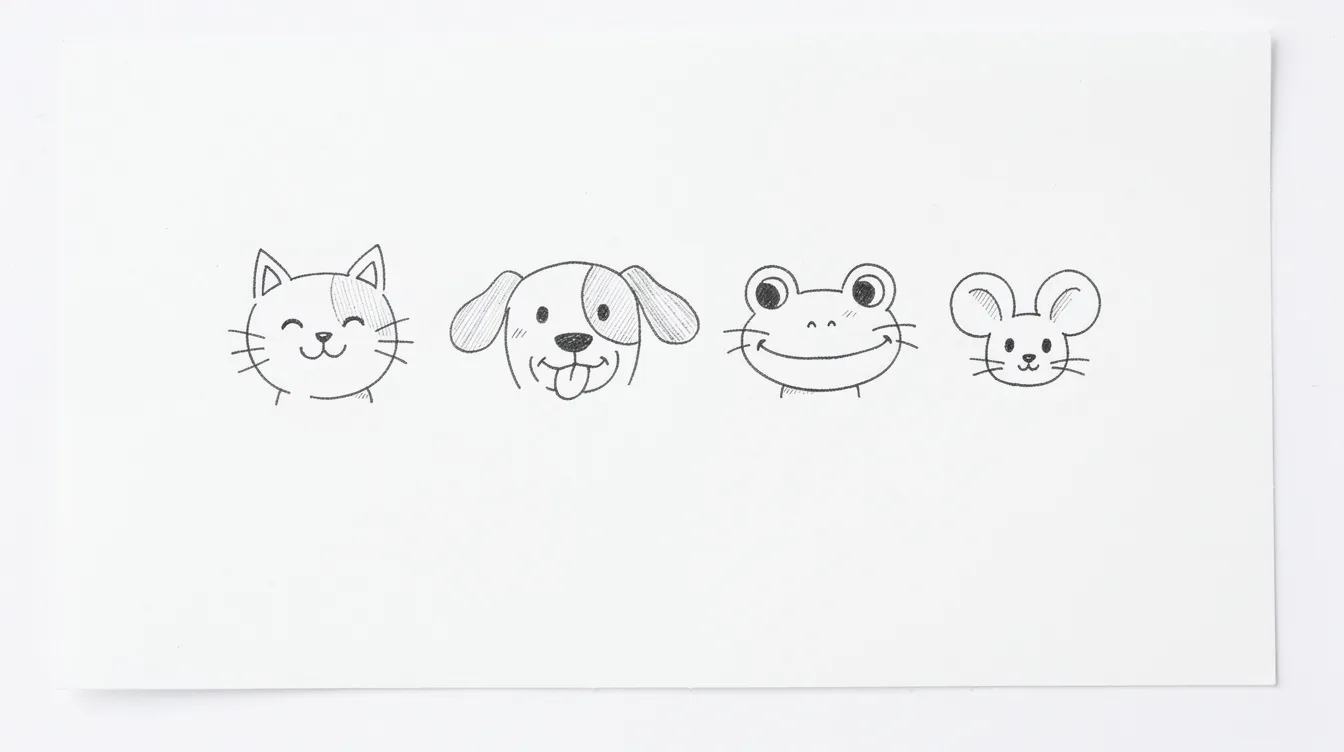
Start with a simple animal head: a circle with two pointed ears is a cat, two floppy ears is a dog, two wide eyes and no ears is a frog. Change the ears to create new characters. Drawing cute animal expressions can add charm to sketches, and giving each animal a different expression turns a row of circles into a group with personality. Place animals inside small journal scenes: a cat in a teacup, a dog on a cloud, an octopus holding a cookie.
Moon and Sky Doodles
Draw a crescent moon with simple craters and add clouds around it. Scatter stars across unused page space to create sleepy sky scenes for evening journaling. A sky full of tiny moons, clouds and dots fills a page corner beautifully, and it works in any colors you have nearby.
Dessert Doodles With an Ice Cream Cone
Draw an ice cream cone with basic lines: a triangle for the cone, a circle on top for the scoop. Add different toppings to each scoop and turn the cone into a cheerful character with eyes and a smile. Place dessert doodles beside food journal entries. Donuts, chips, bread, a bowl of something, even a slice of cake are all easy desserts and snacks to sketch because the shapes are simple and cute.
Texture Doodles for Filling Empty Pages
Choose one repeating mark, fill a small shape with it and combine smooth curves with sharp lines. Filling a circle with tiny zigzags, then filling the one next to it with dots, creates contrast that looks deliberate even when it was not. Use texture blocks as notebook backgrounds, or on a dull to-do list or coffee ring where there is nothing left to protect. The canvas of your page does not need to be blank to be useful.
Shapes Within Shapes
Draw a square inside a larger square. Repeat with circles. Rotate each new shape slightly so the edges cross in unexpected ways. Connect selected edges with short lines. The result looks geometric and intentional, even if you drew it while waiting for the kettle. Encouraging playfulness in doodling helps eliminate creative blocks, and nesting shapes is one of the easiest ways to play.
My Doodle Prompts for Stuck Pages
Write each prompt on a small paper slip, fold the slips into an old pickle jar and draw the first one you pull. The jar fixed my problem of never being able to decide what to put on a blank page. Daily prompt challenges provide structured ways to improve doodling skills, and the jar is the simplest challenge system I know.
Write about thirty slips before you start, or you will see repeats within a fortnight. Mix easy nouns like cup, apple, unicorn, sword, car or fire with odd ones like a very tired cloud or a happy piece of bread. Add a few style slips such as “only circles,” “one pen colour” or “draw it tiny,” since creative constraints can stimulate problem-solving in doodling and they change how you draw as well as what. If you need more slips for the jar, see more doodle prompt ideas.
Allow one put-back per session, then accept the result. Unlimited redraws put you right back to choosing, which is the thing you were trying to avoid.

Random Doodle Prompts I Keep Nearby
Here are a few from my jar right now:
-
Draw a sleepy animal inside a teacup
-
Sketch a tiny house on a mushroom
-
Create a smiling object from my desk
-
Illustrate an unusual character holding flowers
-
A friend wearing a hat made of trees and nature
Doodles can include whimsical elements like animals and everyday objects, and the sillier the prompt, the better the result.
Turning Doodles Into Journal Pages
Reserve one page for daily doodle practice. Add a date beside each drawing and write the prompt word under it so the page feels like a collection rather than a mess. Leave room for short reflections and use borders to connect separate doodles into a layout. If you keep a bullet journal and want to fold random doodles into a proper spread, I have written separately about doodles you can add to a bullet journal.
What I Do When a Doodle Goes Wrong
Cover unwanted marks with a dark pattern, turn mistakes into extra character details (a stray line becomes hair, a blob becomes a hat) or add a border around messy areas. Continue the page instead of abandoning it. My worst doodles get the most comments from the students at the lab bench, which tells me something about how imperfection catches the eye.
Removing the pressure of creating art can stimulate creativity, so skip online prompt generators and fancy sketchbooks. Scrolling for the right result is just choosing again, and cheap paper gives you permission to be messy. Send your inner critic on a walk.
A Simple Random Doodle Routine
Pick a pen, draw a box about the size of a playing card, pull one prompt from the jar and set a five minute timer. Fill the box, and call it done when the box is full, not when it looks right. Doodling helps build muscle memory and improve drawing skills over time, so aim for one box a day rather than six on Sunday and none after. Record your favorite result in your journal. That is the whole routine.
FAQ
What do I do if I pull a prompt I really do not like? Put it back once, then commit to the second slip. Or keep the first and add a twist like drawing it very small or in a single shape. One reply to a bad prompt is usually more interesting than five minutes spent choosing a good one.
How long should a random doodle take? Five minutes is plenty. Some of my favorites took two. It is easy to overthink if you go longer.
Do I need special pens or paper? No. Any pen you do not mind making mistakes with, plus scrap paper or a cheap notebook. You do not need to shop for anything before you start.
How many prompts should I put in the jar? Around thirty. That is enough for a month of daily doodles without seeing repeats.
Can I make random doodles part of a journal page? Yes. Use a small box in a corner, the space beside your notes, or the margin. A doodle does not need its own page to count. Post it, agree with the mess, and move on. That is the whole point.