Introduction: Why Doodle Prompts Save Your Sketchbook On Boring Days
A doodle prompt is a small, specific idea written on a scrap of paper, a sticky note, or the inside cover of a notebook. It tells you what to draw so you do not have to decide. That might sound too simple to matter, but if you have ever sat with a pen in your hand staring at a blank canvas of white page and felt nothing happen, you know how paralysing the word “anything” can be, and how a prompt can unlock ideas when the page feels too open.
My angle is literal. I am a school science lab tech in Fremantle, Western Australia, and I have doodled in the margins of stock-check sheets for years. Two years ago I started folding doodle prompts onto strips of scrap paper and dropping them into an old pickle jar on my desk. Now when I sit down, I pull one slip and draw whatever it says. No planning, no pressure. The core idea is that a good prompt takes the decision away. “Draw a mug that is also a tiny house” is easier than “draw something,” because the odd constraint does half the thinking for you.
The Wikipedia entry on doodles is worth a look if you are curious about what counts as a doodle, but nothing about doodling needs to be good. This is for adults who want to doodle or keep a journal for fun, whether you are a beginner who thinks you cannot draw, a bullet journal person, someone bored at a desk, or someone trying to rescue a messy page. Doodling requires no artistic skill or experience, and it can help reduce anxiety and stress. Doodle prompts can help overcome artist’s block by replacing a frozen moment with a concrete first line. Good prompts for adults are quick, low pressure, repeatable and fit in margins or journal corners. In this article I will walk through what doodle prompts are, the types I keep coming back to, a quick comparison, and how to choose prompts that fit your mood, your time, and the journal or sketchbook page in front of you.
How I Chose The Best Types Of Doodle Prompts For This List
I am not ranking brands or apps here. I am ranking families of doodle prompts that actually get used in real journals and sketchbooks. My criteria: speed (a prompt should work in a 3 to 15 minute break), low difficulty (wonky circles and stick figures are welcome), and flexibility (a prompt should fill a corner, a whole page, or a repeating pattern). Beyond that I looked for enjoyment, because a prompt should feel playful and not like an art assignment, plus journal friendliness on everyday paper with cheap pens, and replay value so it does not go stale.
My test is a five minute timer and a cheap fineliner. Setting a timer can prevent overthinking in doodling, and if a prompt survives months in my jar I know it belongs on this list. Having a specific theme can guide your doodling, so I grouped prompts into families rather than dumping a hundred random ideas. Complex challenges such as full perspective cityscapes are left out. They suit dedicated drawing practice, not quick doodling.
The 7 Best Types Of Doodle Prompts To Try First
Instead of a random list of 100 ideas, I have grouped doodle prompts into seven types so you can notice what you enjoy and repeat it. Each type gets a summary, why it stands out, who it suits, key strengths and honest limitations.
1. Everyday Object Doodle Prompts
Prompts built on simple real objects: mugs, keys, paper clips, tea bags, desk plants. Doodle prompts can include everyday objects and nature scenes, and this is where I send anyone who is stuck. If you want a longer list built on this idea, I have written about my ways to doodle random things elsewhere on this website.
Why These Prompts Stand Out
Familiar objects lower anxiety because you can look at the real thing instead of inventing from memory. Everyday objects can be reimagined with unexpected twists, like drawing your stapler as a crocodile. They make easy mini collections: “20 mugs I have owned” or “everything in my top drawer.” My jar favourites include a cracked teapot, your left shoe from above, a bunch of keys, a whisk, and “the thing nearest your elbow.”
Best For
Adults doodling at work or home, and people starting a doodle journal who feel intimidated by people or animals, do not need to be a drawing person to start with everyday objects. If that sounds like you, my easy doodles for beginners are a friendly place to begin.
Key Strengths
Works perfectly in meeting note margins. Builds observation without a formal sketching session. Easy to theme to your life (my lab drawer of pipettes, labels and one lone safety glove) and to turn into borders or patterns around a page.
Possible Limitations
Everyday objects can get visually boring after a while, and straight edged ones like laptops frustrate wobbly hands.
2. Simple Nature and Plant Doodle Prompts
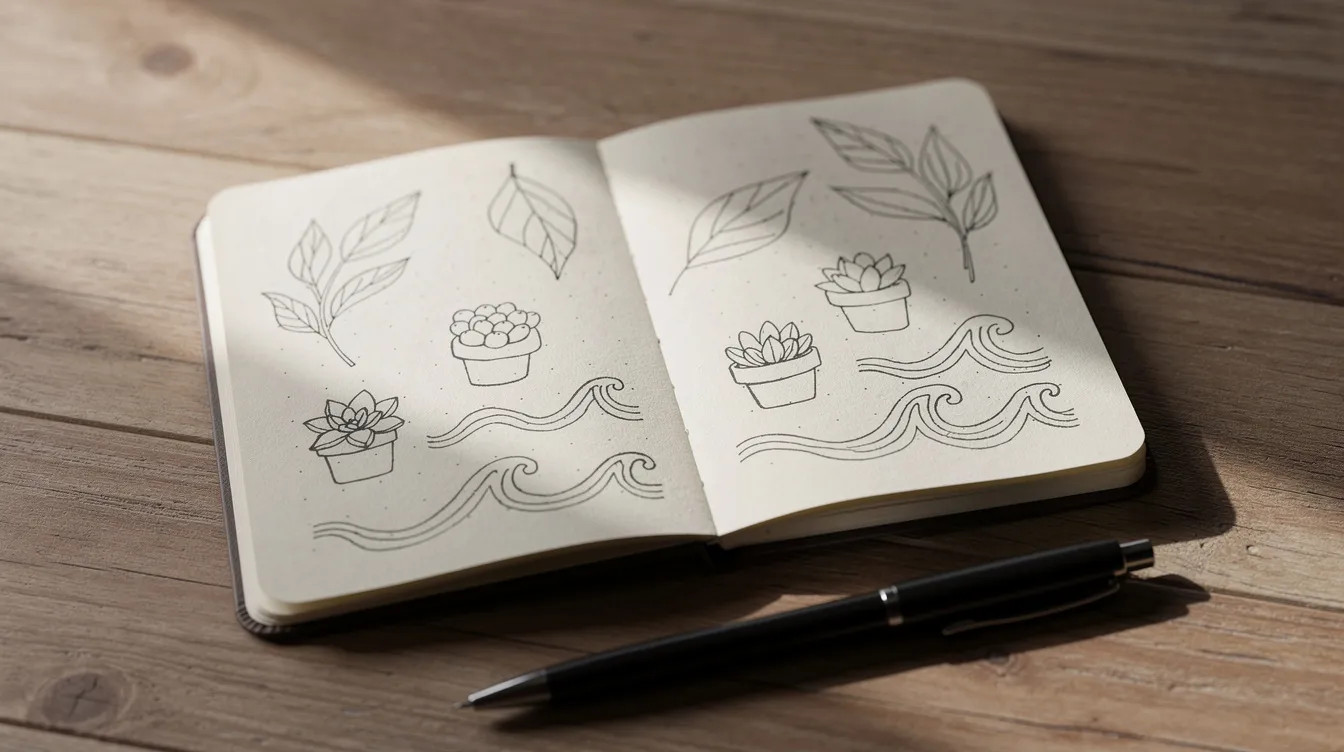
Tiny leaves, vines, succulents, waves, clouds, mountains, pebbles and feathers. Rock pool finds are a favourite theme of mine living near Fremantle.
Why These Prompts Stand Out
Natural shapes are calming and repetitive, and organic wonkiness is forgiving. Simple flowers can be drawn using basic shapes like circles and ovals. At that stage, focus on the overall shape first before adding smaller details like petals or leaf overlaps. Doodling plants with personality adds character to any page. Plants and florals remain popular on bullet journal trackers and monthly covers.
Best For
Evening unwinding, and decorating calendars, mood trackers and reading logs with foliage or weather doodles. Doodling is a fantastic way to unwind and boost creativity, and nature prompts lean into that.
Key Strengths
Curved lines hide mistakes, and size is flexible from tiny icons to full page spreads. You can vary by season, such as eucalyptus sprigs for an Australian summer or bare branches in winter.
Possible Limitations
Florals can turn a bit stale, and stylised flowers need practice to avoid looking identical every time.
3. Pattern and Filler Doodle Prompts
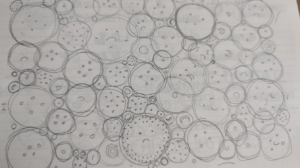
Repeating motifs and textures: stripes, checkerboards, scallops, brick, waves, tangled lines, Zentangle style areas. Abstract doodle prompts encourage free flowing expression, and patterns are the purest form of that.
Why These Prompts Stand Out
Ideal when your brain is fried and you want to fill space calmly. Filling a page with different patterns can be meditative and satisfying. Doodling mistakes can be hidden by adding more doodles, and patterns are the perfect tool for that. Half my favourite pages began as bad doodles I decorated until I liked them. Mistakes in doodling can be hidden by adding more details, so a smudge becomes a dense pattern patch.
Best For
Long calls on autopilot, and anyone wanting quick border and header fillers. Patterns can fill shapes and create interesting backgrounds behind lettering or icons.
Key Strengths
Works with zero subject ideas (“fill half the page with triangles”) and rewards repetition over skill. My favourite: a leaf outline with a different pattern in each section. Cheap black pens are enough.
Possible Limitations
Monotonous if you repeat two patterns forever, and dense patterns can bleed through thin paper.
4. Tiny Scene and Vignette Doodle Prompts
Small scenes rather than single objects: a cafe table on a rainy street, a bookshelf corner, a window with a cat tail. Doodling can be a way to explore different aesthetics and themes, and scenes let you do exactly that.
Why These Prompts Stand Out
They feel like little stories and satisfy on their own, while teaching composition without a full landscape. Creating tiny worlds within the confines of a simple shape fosters creativity. Themes can transform ordinary items into miniature ecosystems or secret cities. You can use clusters to combine doodles into cohesive designs within a single scene.
Best For
Journal keepers pairing doodles with short notes, and doodlers bored of isolated icons who are ready to explore a bit beyond their comfort zone.
Key Strengths
A few elements are enough: a table, a window, a lamp. Good for monthly snapshot pages, and they make you notice your real kitchen or commute.
Possible Limitations
Intimidating if you say “I’m not an artist,” and often longer than five minutes.
5. Prompt Jar and Random Combination Doodles
Combine random words from a jar: “cactus plus headphones,” “teacup plus galaxy,” “umbrella plus jellyfish.” This is my signature habit and the reason this blog exists. Combining cosmic themes with everyday items results in whimsical designs you would never plan on purpose.
Why These Prompts Stand Out for Creative Inspiration
Randomness cuts through perfectionism because the result is meant to be odd. Random combinations can unlock unexpected ideas when you feel stuck. Doodling can help let go of perfectionism when the prompt itself is silly. Random drawing prompts can stimulate creativity when feeling stuck. Here is how I run my pickle jar: write twenty or thirty slips in ten minutes, fold them, then jump in with the first slip instead of waiting for a better idea. Set a five minute timer and draw the first thing that comes to mind, not the best idea. Add one extra detail (a pattern, face, shadow or border) so it feels finished, then move on without redoing it. Refill the jar monthly and retire slips that never inspire you.
Best For
Anyone in a creative rut who draws the same three things weekly, and fans of surreal combinations. Mini doodle challenges can serve as fun starting points for artists at any level. Doodle challenges encourage experimentation with styles and techniques you would not normally choose.
Key Strengths
Every draw is a mini game and forces odd connections. The exquisite corpse, the old pass the page game, works like a “swap and finish” round with friends who turn your squiggle into something unexpected. Rule games help on flat days: one continuous line, non dominant hand, one pen only, or an A to Z alphabet run.
Possible Limitations
Two complex words can overwhelm, and swapping slips can replace committing. My rule is to swap without guilt, but only once.

6. Mood, Lettering and Word Based Doodle Prompts
Start from a word, mood or favourite line, such as “quiet,” then surround it with simple doodles. Doodling can incorporate emotions by personifying abstract feelings. Doodle prompts can be used for journaling and coloring pages, and word based prompts bridge both.
Why These Prompts Stand Out
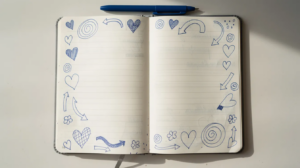
Helps if you hate your handwriting, since one word anchors a page of icons and patterns. Drawing with guides helps arrange doodles in balanced shapes around that central word. Frames can accentuate doodles around journal titles and headers. Banner or header examples can also help when you want a simple starting layout for the page.
Best For
Bullet journal users who like headers and banners, and people who want to reflect without long diary entries. You can write a single word and let the pen do the rest.
Key Strengths for Developing Your Unique Artistic Voice
Simple lettering with no calligraphy needed, easy icon lists around “coffee,” “rain” or “travel,” and messy writing that looks intentional once surrounded by doodles.
Possible Limitations
Self conscious writers may avoid the word entirely, and pages can look alike without varied banners and boxes.
7. Quick Character and Creature Doodle Prompts
Ultra simple people, animals and imaginary creatures built from circles, blobs and sticks. You can create art with just basic shapes, and characters prove it. Prompts can include whimsical scenarios like a penguin dancing or a lighthouse wearing a hat.
Why These Prompts Stand Out
A blob with eyes adds emotion and humour. Turn tasks or habits into little characters for trackers, and give the teapot eyes or the key a tiny face. Scribbling random shapes can lead to discovering hidden characters you did not plan.
Best For
Adults bored with objects and florals, and mood or habit tracker keepers who want expressive log icons.
Key Strengths
Personality needs no realism, and off balance proportions look funnier, not wrong.
Possible Limitations
Some feel shy about characters or compare themselves to polished illustrators on Instagram. If even simple shapes feel awkward, I have written about easy doodles for beginners as a gentler place to start first.
Quick Comparison Of The Best Doodle Prompt Types
Scan by time, energy and mood:
-
Everyday Object Prompts: quick desk doodles using whatever is in front of you.
-
Nature and Plant Prompts: calm evenings and trackers.
-
Pattern and Filler Prompts: blank space and messy pages.
-
Tiny Scene Prompts: one story like page when you have more time.
-
Prompt Jar Combinations: playful random bursts of excitement.
-
Mood and Word Based Prompts: journaling without full sentences.
-
Character and Creature Prompts: humour and personality in any corner.
How To Choose Doodle Prompts That Actually Fit Your Day
You do not need every type at once. Pick by time, energy and where you doodle.
Choose Based On How Much Time You Have
Under 5 minutes: icons, plants, micro patterns, one desk object. 10 to 20 minutes: tiny scenes, character lineups, a page border. Half an hour or more: layered patterns and detailed jar combinations. Be realistic about workdays versus weekends. You do not need a video tutorial or a perfect set up. Just grab a pen and follow the timer.
Choose Based On Your Current Energy and Mood
Frazzled or anxious: patterns and foliage for soothing repetition. Playful or bored: jar combinations and critters bring fun back fast. Reflective: word prompts with small icons. Keep “calm,” “silly” and “quick” lists inside a notebook cover so you can choose without thinking. Finish the timer, not the drawing. A half done doodle is a good doodle.
Choose Based On Where You Doodle or Your Blank Canvas
Thin bullet journal pages need light line work and little solid black. A5 or A4 sketchbooks suit bold patterns and bigger scenes. Work notebooks suit discreet margin patterns that do not dominate your notes. I have written about my bullet journal doodle ideas for readers who want to see where small drawings fit best on a layout. Themed lists like “ten kinds of cup” fit margins and spare corners beautifully.
Which Doodle Prompt Types Are Best For You Right Now?
Choose Everyday Objects to start tonight with a pen and whatever is on your desk. Choose Pattern and Filler to cover ruined pages and turn them into something you love. Choose Nature and Plant to wind down before bed with something beautiful and forgiving.
Choose Prompt Jar Combinations if you are bored and want a reason to laugh at your sketchbook again. Choose Mood and Word Based if you want to journal without paragraphs. Choose Tiny Scene or Character prompts to push beyond icons and dive into discovering your own style.
After a few weeks of jar prompts I wanted to draw shading with real light on it, and gems turned out to be a lovely small challenge: simple shapes with dramatic effect. I am a genuine fan of Lisa’s drawing academy for being clear and patient, and a lesson on pencil gemstones gave my flat doodles real sparkle. Think of it as an optional next step once prompts feel too easy and you want to learn a bit more, but that is tomorrow’s problem. The point today is to keep your pen moving.
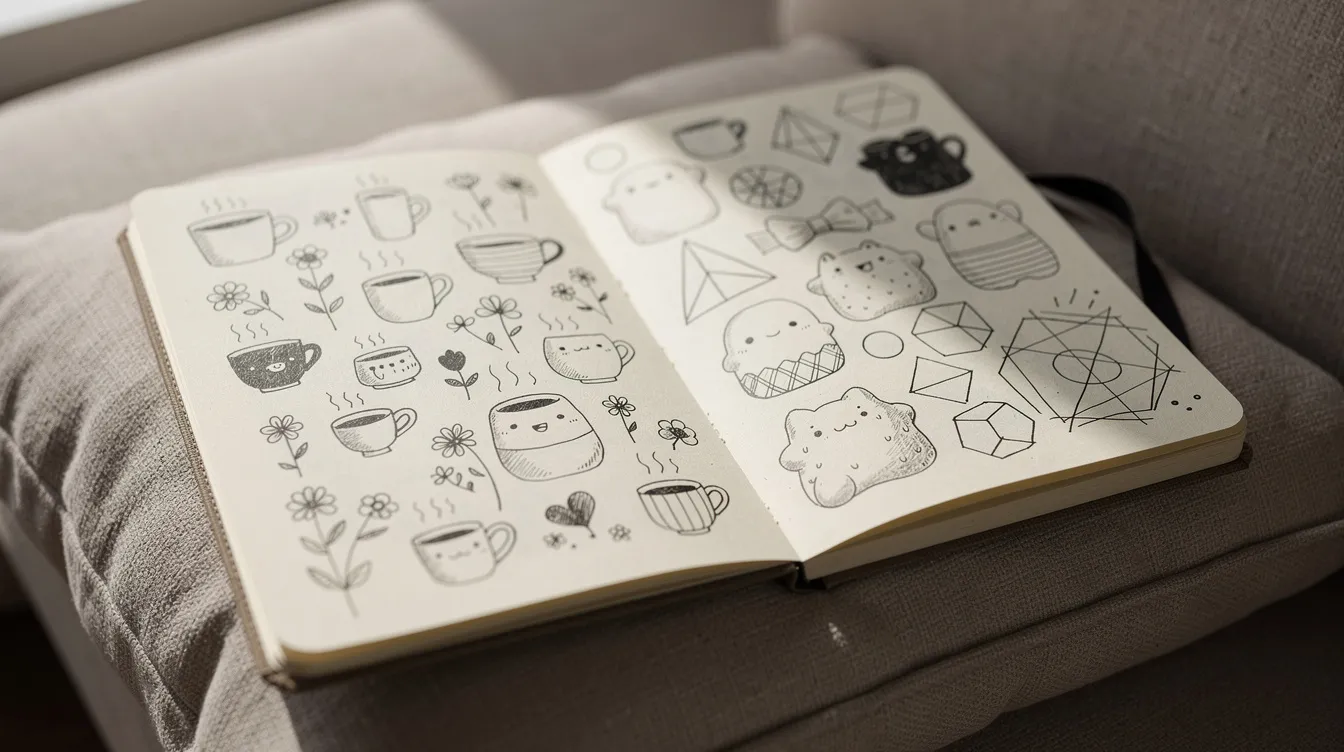
Final Thoughts: Keep Your Pen Moving and Make Something, Not Perfect
No single prompt type wins overall. The best choice changes with season, schedule and mood, and that is the kind of creative inspiration that keeps a journal alive rather than gathering dust.
Build your own jar (or a notes app list) from these categories, mixing types so you never draw five objects in a row. Add ideas whenever a boring meeting or bus ride sparks one. Over time the jar becomes a log of what you enjoy drawing, a sign of your own unique artistic voice emerging page by page. The possibilities really are endless once you stop waiting for the perfect idea and just turn the page.
I still doodle in the margins of stock-check sheets, and prompts keep me turning pages instead of stalling on perfect spreads. The jar on my desk is never empty and my journals are never finished, which is exactly the point. I hope you find something in this post that gets your pen moving tonight. If you do, I would love to hear about it. Leave a comment or tag your page so I can see it. Ready to start? Fold a few prompts, drop them in whatever container is nearby, and pull one out. That is all it takes to create more art and bring a bit of life back to a blank page. Welcome to the process. Join in whenever you like.
FAQ
How many doodle prompts should I do in one sitting?
Three to five is plenty. With a five minute timer that is under half an hour, short enough to repeat tomorrow and confident enough to feel like progress. You do not need to download a massive list or follow a rigid challenge to make it work.
Do I need special pens or paper?
No. A ballpoint and the back of an envelope will do. I use cheap fineliners, but the prompt matters far more than the pen. You do not need to paint or invest in fancy supplies. Forget expensive tools and just use what is on the table.
What if my doodles all look the same?
Add rules: use your other hand, limit colours, change scale, or combine two words. Those little constraints can teach you new ways to keep your doodles from all looking the same. It is also a promise that variety will happen on its own once you rotate prompt types.
Can I use these prompts in a journal?
Yes. Themed lists fit margins, headers and spare corners. Doodle prompts work for journaling just as well as standalone sketchbook pages. They are designed to be small and adaptable.
Should I finish every doodle?
Finish the timer, not the drawing. Five minutes is the unit. A half done doodle still counts. That is a straight path toward making more art with less pressure, which is the whole point of introducing inspired constraints into your day.